We Value Your Privacy
We use cookies to enhance your browsing experience, serve personalised ads or content, and analyse our traffic. By clicking 'Allow All', you consent to our use of cookies. For further details, please see our cookies policy.
We use cookies to enhance your browsing experience, serve personalised ads or content, and analyse our traffic. By clicking 'Allow All', you consent to our use of cookies. For further details, please see our cookies policy.
View navigation
Our curriculum
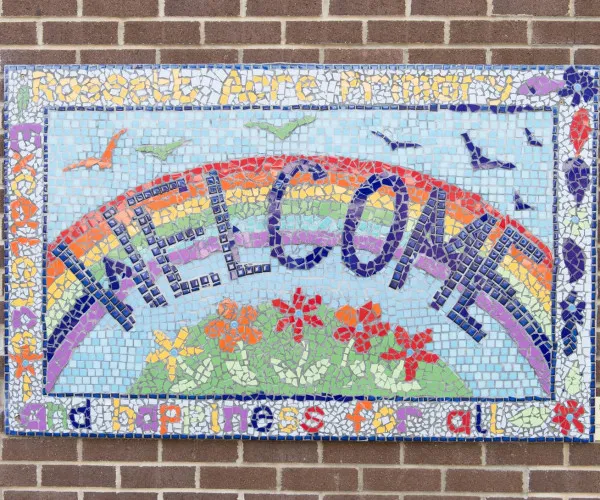
In mathematics, we promote excellence and happiness for all by providing children with a rich and stimulating curriculum, enabling them to achieve confidence and competence mastery in mathematics.
We believe that all children are capable of achieving high standards and we use carefully planned lessons and resources to foster deep conceptual and procedural knowledge. We aim to ensure that all pupils become fluent in the fundamentals of mathematics and develop a lifelong love of learning in this subject.
For children with Special Educational Needs and Disabilities to experience success, enjoyment and embrace learning in maths, barriers to learning and participation are removed through additional support and / or adapted provision. Please refer to our Whole School Provision Map, Our Support Strategies for Inclusive Classrooms and Inclusivity in... documents which can be found in the SEND section of our website.
Children begin to master maths through a rich and varied range of practical activities both inside the classroom and in the stimulating outdoor area.
We teach for mastery in mathematics. Our school approach enables pupils to develop a deep, long-term, secure and adaptable understanding of this subject at every level of their learning.
Fluency with times tables supports calculations and helps understanding of other aspects of maths such as fractions, decimals and percentages. By the end of Year 4, children are expected to know the tables up to 12 x 12.
We aim for children to become fluent in the fundamentals of mathematics so that they develop conceptual understanding and the ability to recall and apply knowledge rapidly and accurately.
We encourage children to reason mathematically by following a line of enquiry, exploring relationships and generalisations, and developing an argument, justification or proof using mathematical language.
Children are taught to solve problems by applying their mathematics to a variety of problems with increasing sophistication, including breaking down problems and persevering in seeking solutions.